A former warehouse becomes a boutique hotel. An old shophouse is transformed into a restaurant. A building once associated with everyday commerce becomes an address celebrated for its architectural character.
Across Singapore, historic buildings have found new purposes within contemporary hospitality. Their original functions may have disappeared, but their architectural details and cultural associations remain attractive to developers, designers and travellers.
There is considerable value in giving ageing buildings a viable future. Yet when history becomes part of a commercial experience, an uncomfortable question emerges: are we preserving heritage, or packaging it for consumption?
The distinction is not always straightforward.
The Commercial Value of Preservation
Heritage conservation and commercial development are sometimes presented as opposing interests. In practice, the relationship can be more complicated. Historic buildings require ongoing maintenance, specialised restoration and investment. Without economically sustainable uses, some may struggle to remain functional.
Adaptive reuse offers one possible solution.
Singapore’s Urban Redevelopment Authority (URA) recognises the importance of retaining historic buildings while allowing appropriate changes of use. Its conservation principles emphasise maximum retention, sensitive restoration and careful repair, rather than preserving only a building’s external appearance.
Hospitality can contribute to this process by introducing new activity and financial purpose into structures that might otherwise remain underused.
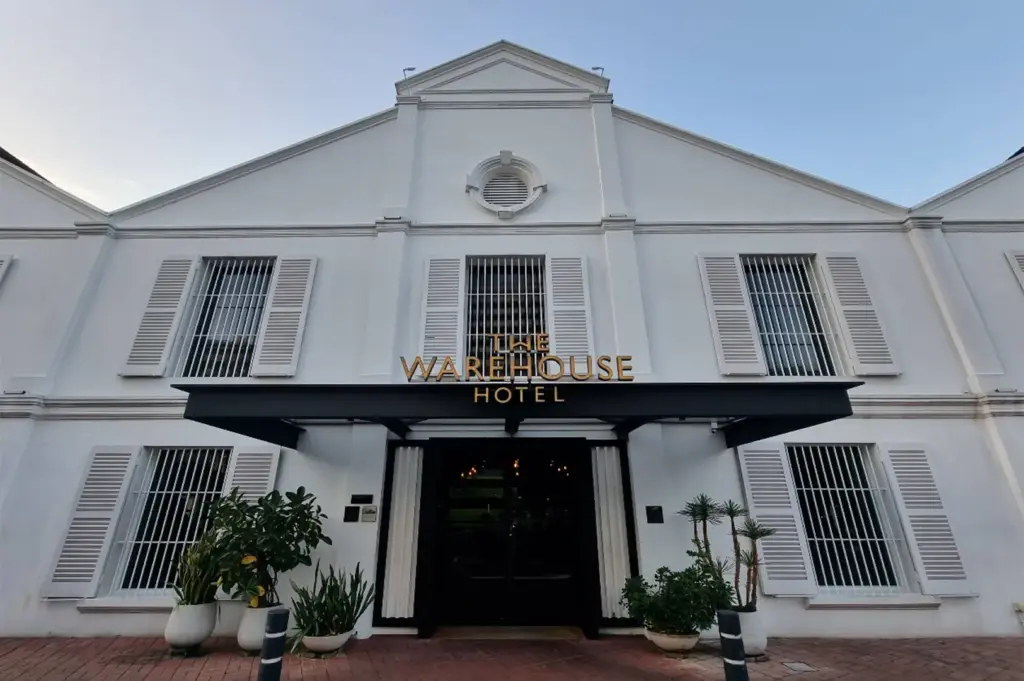
The Warehouse Hotel at Robertson Quay illustrates this possibility. Originally constructed in 1895, the riverside warehouse was restored and reopened as a boutique hotel in 2017. Its industrial architecture remains an essential part of the property’s identity, connecting contemporary guests with a period when the Singapore River functioned as a commercial artery.
But the building’s transformation also changes how its history is experienced.
What was once a working environment has become a carefully designed setting for leisure. Its historical associations now contribute to the appeal of a commercial hospitality experience. Neither transformation nor commercial use necessarily diminishes its heritage value. The more interesting question is what happens to historical meaning when it becomes part of a brand.
When History Becomes an Experience
Heritage hospitality often relies on storytelling.
Original materials, restored façades, archival photographs and references to former occupants can establish a connection between a building’s past and its present use.
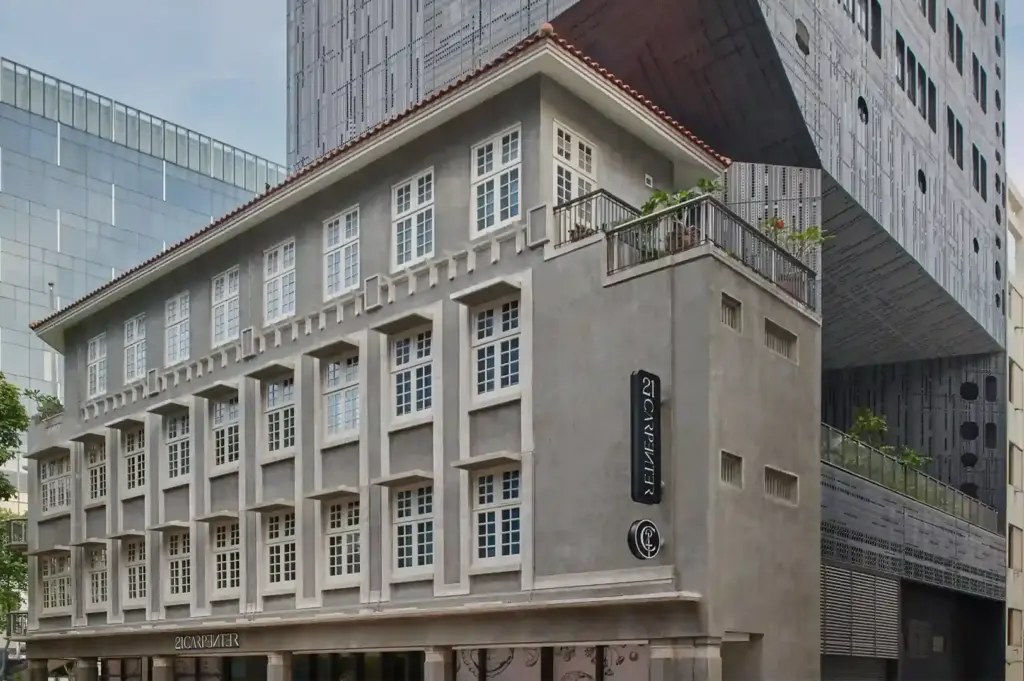
At 21 Carpenter, a boutique hotel occupying former remittance-house premises dating to 1936, architecture firm WOHA incorporated phrases from historical remittance letters into the building’s contemporary façade.
These references acknowledge the experiences of Chinese migrants who used the original business to send money and messages home. The design demonstrates how historical research can inform contemporary architecture without requiring a literal reconstruction of the past.
Yet it also reveals a delicate tension.
Personal stories associated with labour, migration and economic necessity now form part of the identity of a luxury hospitality property. This does not make their inclusion inappropriate. Indeed, acknowledging these histories may be preferable to erasing them entirely.
However, there is a difference between making history visible and turning it into an aesthetic.
When historical narratives are selected primarily for their visual appeal or emotional resonance, difficult aspects of the past can become secondary.
A building’s history may include inequality, displacement, hardship or activities that sit uneasily alongside its contemporary image. Authentic interpretation requires room for these complexities rather than presenting heritage as an uninterrupted story of charm and nostalgia.
Who Benefits When Heritage Is Reimagined?
The commercial transformation of historic buildings also raises questions beyond architecture.
A successful heritage hotel can support conservation, attract visitors and introduce new audiences to a neighbourhood’s history. But commercial success does not automatically guarantee cultural continuity.
When older districts become increasingly desirable hospitality destinations, their identities may gradually shift towards the expectations of visitors and consumers. Traditional businesses, longstanding communities and ordinary neighbourhood activities can become less visible, even when the surrounding architecture remains beautifully preserved.
This is not an inevitable consequence of adaptive reuse. Nor is hospitality solely responsible for changes shaped by property markets, planning decisions and wider economic pressures.
Nevertheless, conservation deserves to be understood as something broader than maintaining attractive buildings.
A neighbourhood’s character comes partly from the people, relationships and everyday activities that give its architecture meaning. Preserving the physical setting while losing these connections risks creating a version of heritage that looks convincing but feels increasingly detached from its origins.
Beyond the Heritage Aesthetic
The challenge for contemporary hospitality is not to avoid commercialising historic buildings altogether. Without practical uses and continued investment, preservation can become difficult to sustain.
The more meaningful distinction lies in how heritage is interpreted, who participates in that interpretation and whether its historical significance remains visible beyond the demands of branding.
Thoughtful adaptive reuse can allow buildings to evolve while acknowledging the lives and activities that shaped them. But history should not become valuable only when it contributes to an attractive guest experience.
For Singapore, where urban transformation and conservation continually intersect, this question extends well beyond hotels and restaurants.
Perhaps the measure of successful heritage hospitality is not simply whether an old building has been given a profitable new life, but whether its past remains meaningful after the transformation.
Preservation should allow history to continue speaking, even when its message is less comfortable than the experience being sold.