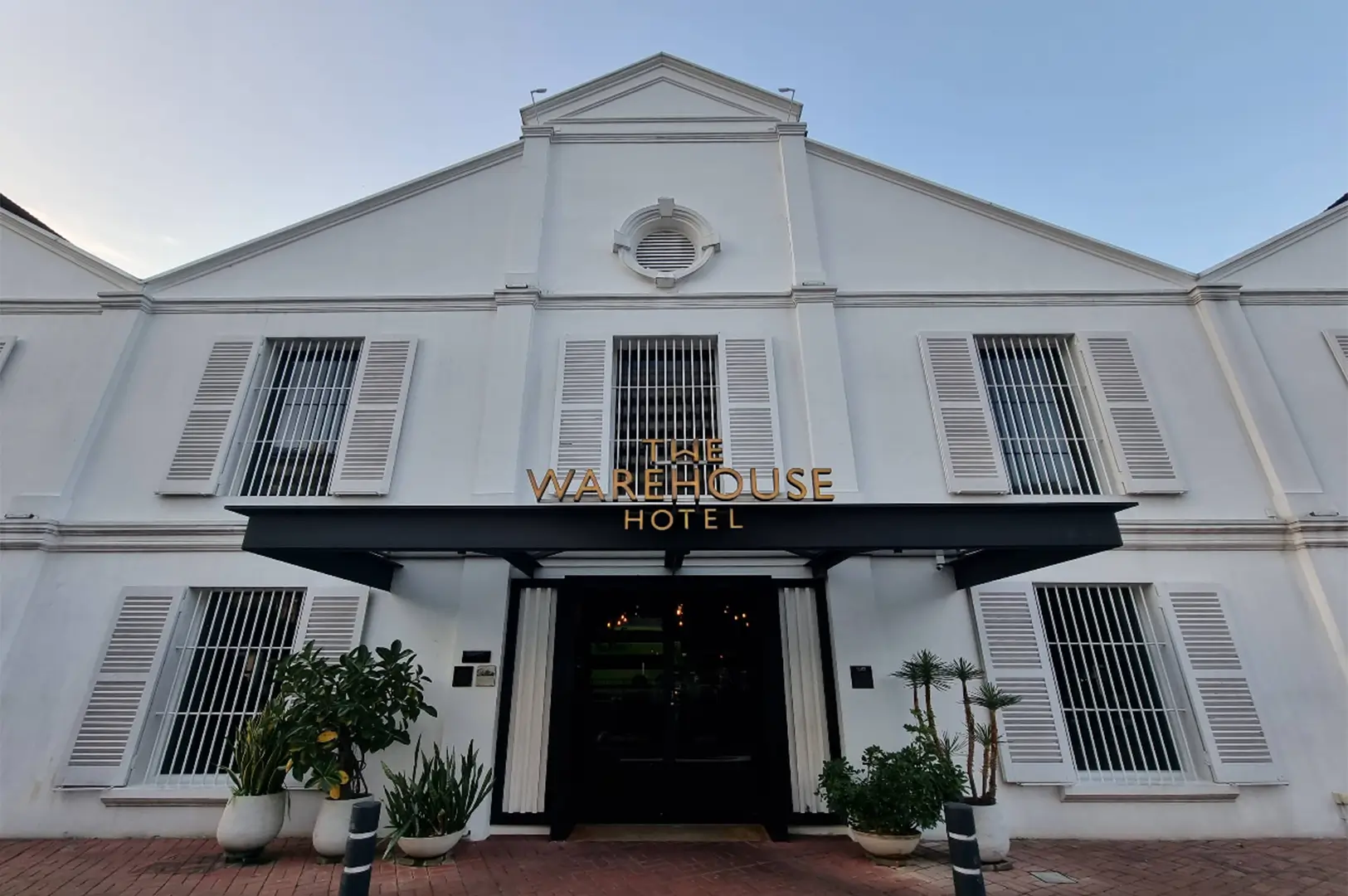
Long before Robertson Quay became a place for dinner by the water, the Singapore River was where the city did its business. Goods arrived, changed hands and waited in warehouses along the banks.
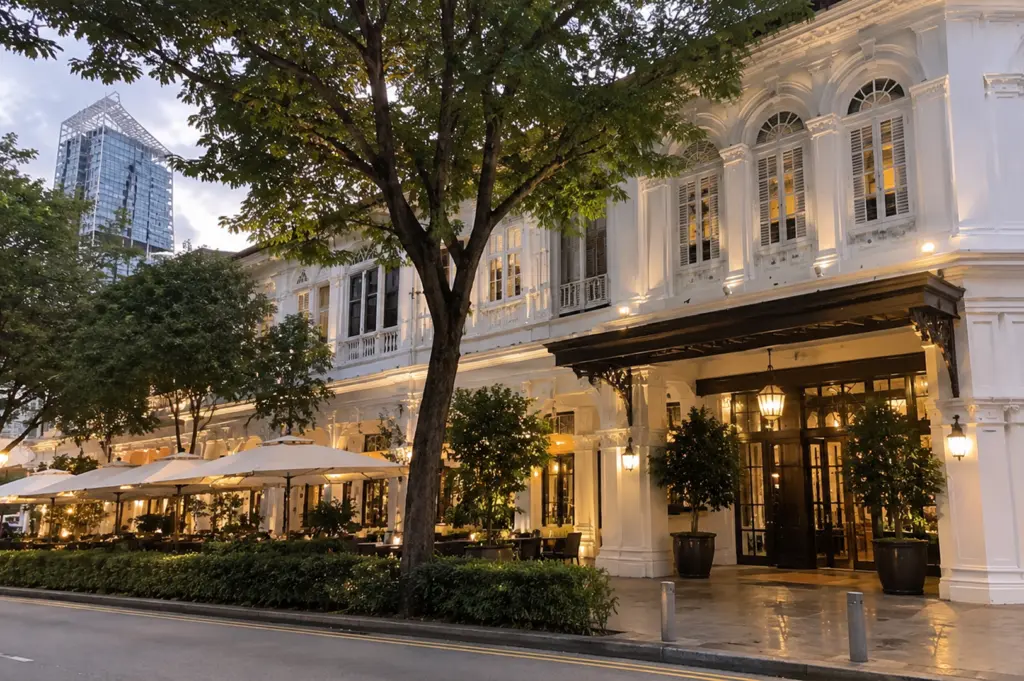
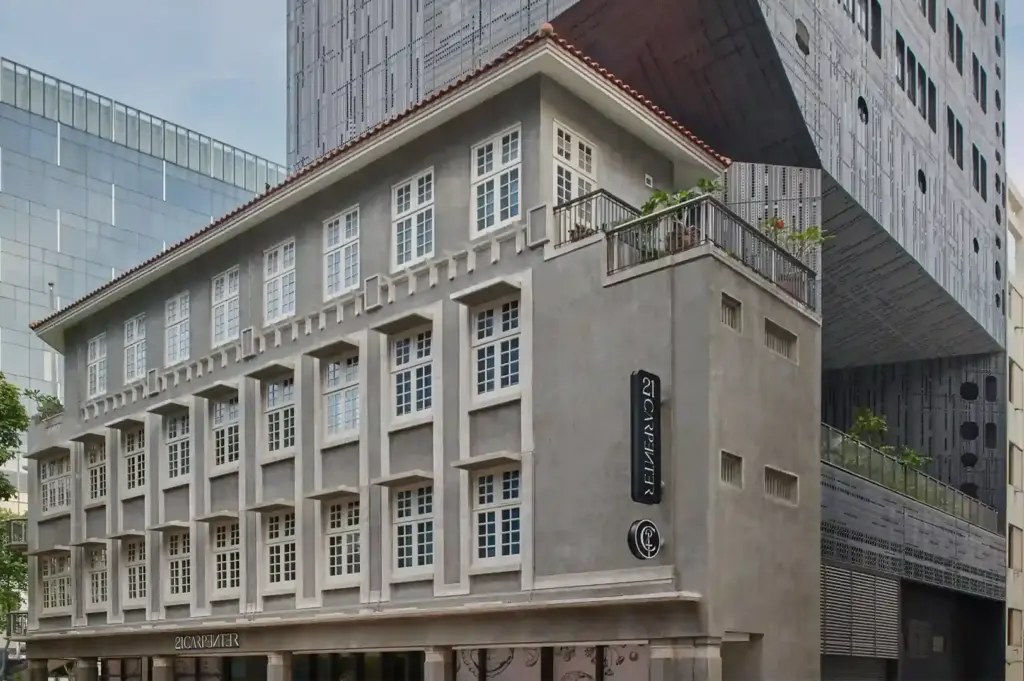
One of those warehouses still stands at 320 Havelock Road. Built in 1895, it opened in January 2017 as The Warehouse Hotel, a boutique property run by The Lo & Behold Group and part of the Design Hotels portfolio.
What interests me isn’t just that the building survived. It’s what its second life says about the river it was built for. If you want to understand what makes this category of property distinctive before you book, it’s worth reading about what defines a boutique hotel and what separates it from the rest.
The Warehouse Hotel and the History of Robertson Quay: A Great Location on the Singapore River
The warehouse is associated with Lim Ho Puah, who inherited the shipping company Wee Bin & Co. It stood on a river at the center of the Lion City’s maritime trade.
The surrounding streets had a rougher reputation. The Robertson Quay and Havelock Road area was linked with liquor distilleries, secret societies, gambling, opium and a red-light district. It was once associated with the Hokkien name Chiu Long Lo, a reference to liquor, a world where lady luck rarely showed her face. Those stories belong to the neighborhood, not this building. Its job was storage.
Today the riverside paths lead past cafés, bars and restaurants instead of cargo. Clarke Quay is nearby, and the area is convenient for shopping, dining and exploring central Singapore. Havelock MRT, Exit 4, is the closest station, about seven minutes on foot, making the location genuinely walkable. Orchard Road and the National Gallery are reachable by public transport.
The building changed purpose when the river did. That, to me, is the quiet logic of this hotel.
Inside the Hotel Lobby: Industrial Heritage Meets Contemporary Design
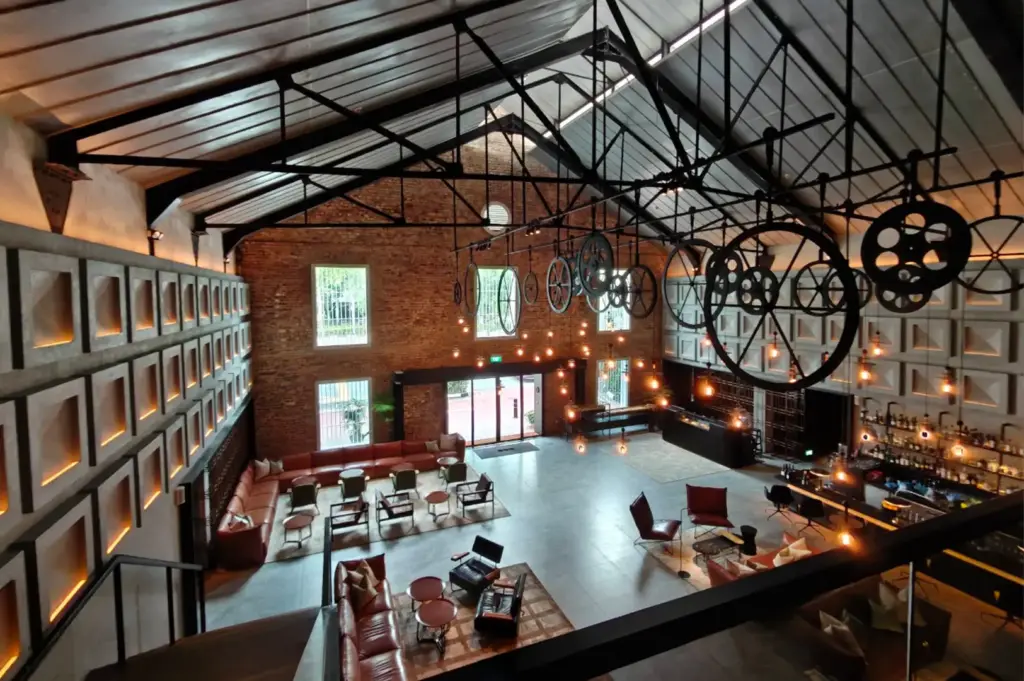
Zarch Collaboratives handled the architecture. Asylum designed the interiors. Together they kept what made the building a warehouse.
The peaked roofs remain. So do the high ceilings—nearly a double-height vaulted ceiling in places—the original beams and trusses, and the traditional shuttered windows. Original masonry walls ground the lobby area in the building’s industrial past. In the hotel lobby, the roof structure still shapes the space.
The most telling detail is the lighting. A custom installation uses wheels and pulleys—the hardware of loading and lifting—turned into mood lighting that warms the room without softening its character. Intricate details like these, along with the iron staircase connecting the levels, reward guests who slow down and look.
Contemporary furniture fills the room, and the lobby bar is woven into it. Nothing here pretends the building was always a hotel. I find that honest. The industrial bones aren’t hidden behind finishes. They’re what gives the space its character.
Rooms at The Warehouse Hotel Singapore: River Views and Loft Living
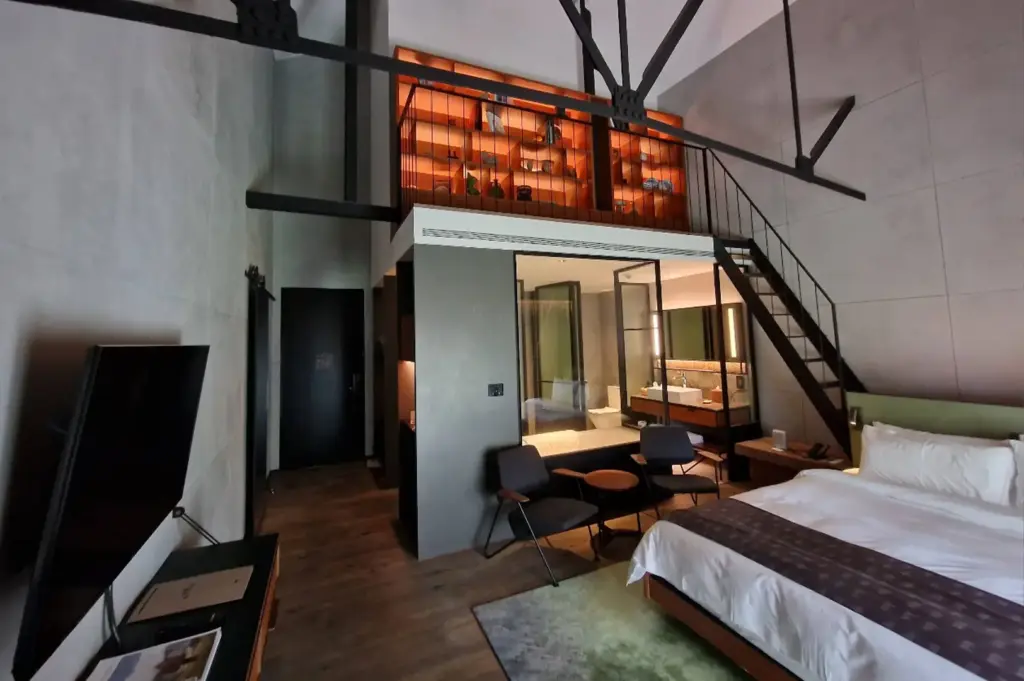
The room categories ask a simple question: what do you want from a heritage stay? History, daylight or the river?
- Warehouse Sanctuary (27 sqm, ground floor) has no windows. It relies on warm ambient lighting instead of natural light. Some guests will find that restful. Others won’t.
- Warehouse Loft (27 sqm) sits upstairs, with high ceilings and a skylight or windows.
- River View Room (34 sqm) is on the ground floor, facing the Singapore River.
- River View Loft (34 sqm) adds height: peaked ceilings, original beams and the river outside.
- River View Mezzanine (45 sqm) splits over two levels, with a reading library upstairs and a standalone bathtub. An internal staircase connects the two, so think carefully if stairs are difficult.
- River View Suite (57 sqm) is the largest, an open-plan loft with a living area, a super king bed and a standalone bathtub.
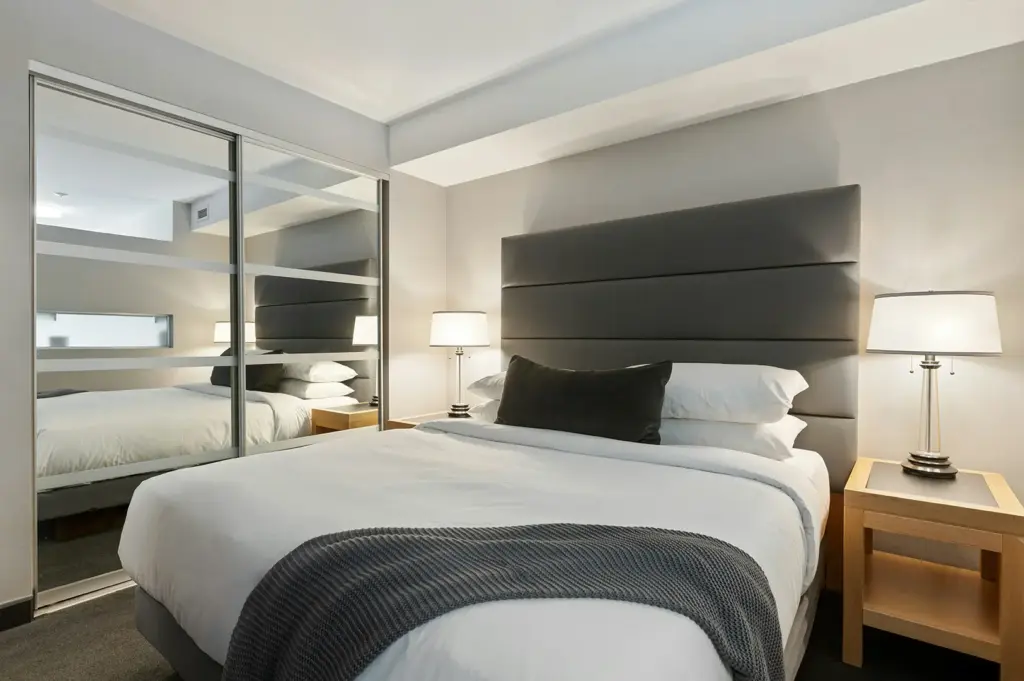
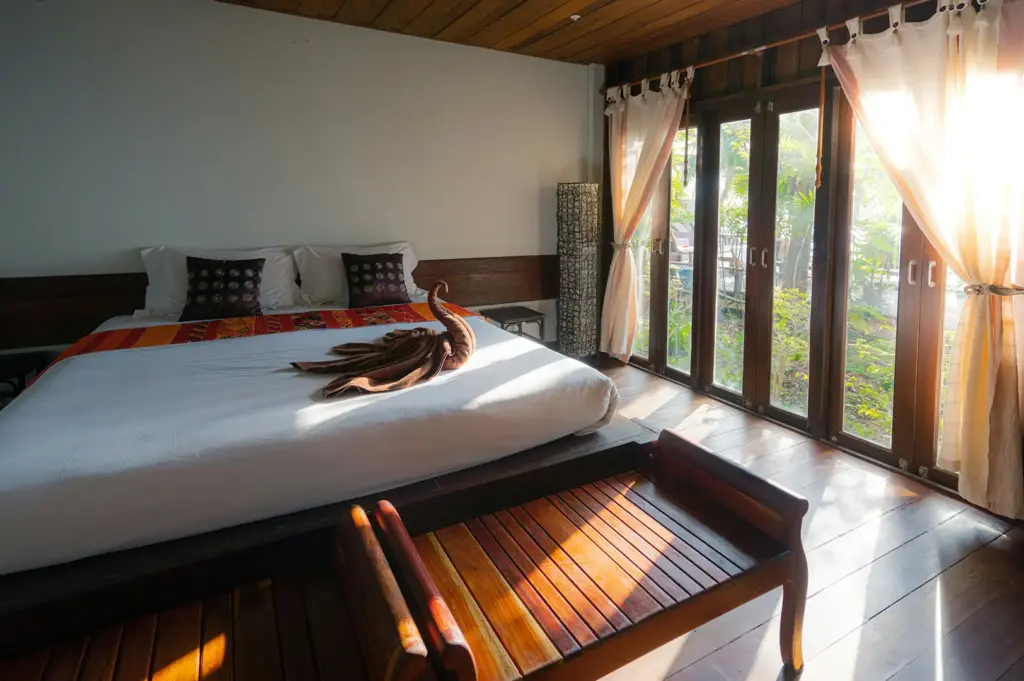
Across the comfortable rooms, you’ll find a rain shower, air conditioning, Ashley & Co toiletries, Bang & Olufsen speakers, artisanal tea and coffee, and a minibar of local treats. The amenities are thoughtfully chosen rather than just standard.
Rooftop Infinity Pool and Hotel Facilities
The rooftop infinity pool sits on the second floor, looking out over Robertson Quay. It opens daily from 7 a.m. to 10 p.m. and is 1.2 meters deep. There’s no lifeguard, and children need adult supervision.
Beyond that, the list is short. There’s no gym and no spa. Two complimentary bicycles are available, first come, first served, and there’s a concierge. The front desk staff can arrange airport transfers on request.
That restraint suits the building. This was never meant to be a resort.
Dining at Po Restaurant and The Warehouse Lobby Bar: Excellent Flavours and Craft Cocktails
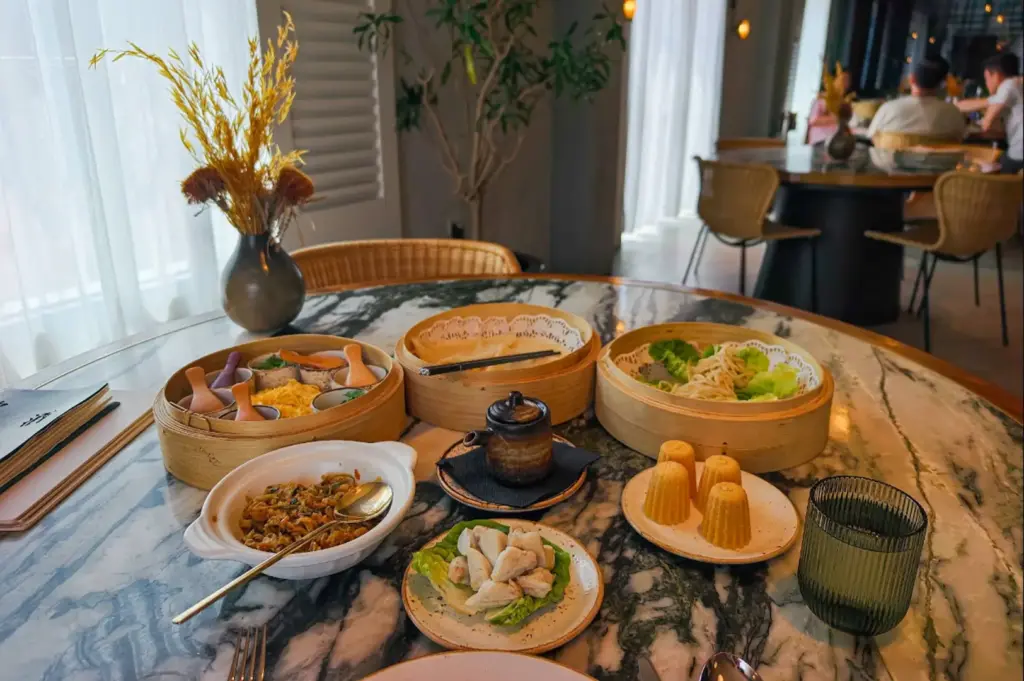
Po takes its name from “Popo,” a word for grandmother. That tells you where the menu begins.
Restaurant Po serves modern Peranakan food, drawing on family recipes, traditional techniques and Southeast Asian ingredients. Popiah is the signature, served with accompaniments so you assemble it yourself. The published menu lists Classic Popiah at SGD 32 and Asian Lobster Popiah at SGD 58, each for one to two people. Prices may change. Po isn’t halal-certified.
The lobby bar rounds out the dining options, with craft cocktails that reference the area’s history, including the spice trade, alongside bar snacks. A happy hour runs Monday to Friday from 3 to 7 p.m., with cocktails from SGD 15++.
Prices and Value at The Warehouse Hotel
Nightly rates shift with dates, room category and promotions, so check directly for a quote. Breakfast inclusions vary by booking. Limited free parking is available on a first-come, first-served basis—do not count on it. An incidental deposit of SGD 100 per night is held on your card and released after check-out. Some additional services come at extra cost.
Value depends on how much the building’s story matters to you.
Check In, Marriott Bonvoy and Service
Check in is at 2 p.m. and check-out is at 12 p.m. Early arrival and late departure depend on availability; short extensions of up to two hours may be free. In-room dining runs from noon to 10 p.m. The hotel participates in Marriott Bonvoy as a Design Hotels property, though benefits depend on how you book. The desk staff are available around the clock for guest assistance.
A Considered View: Who Will Appreciate The Warehouse Hotel Most
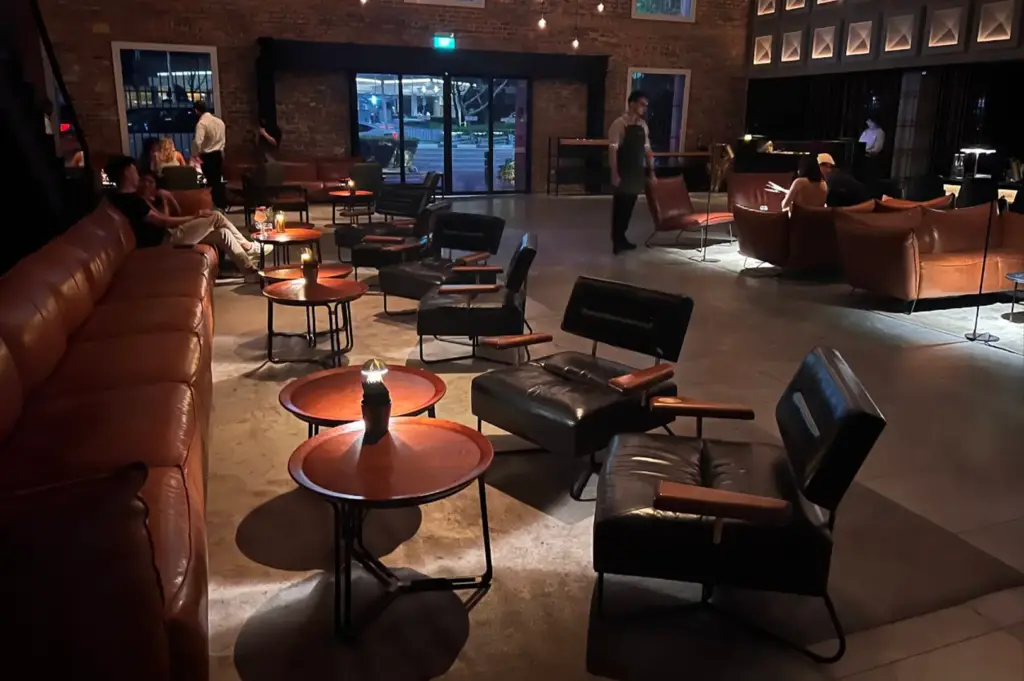
The Warehouse Hotel works best for travelers who arrive with some interest in where they’re sleeping, not just a bed for the night. Design-conscious visitors, couples after a riverside staycation, and anyone drawn to Singapore’s layered urban history will find the building adds something that a conventional hotel simply can’t offer.
What the hotel does well is harder to quantify. It keeps the warehouse honest. The peaked roofs, the original beams, the lobby that still feels like a space built for something other than hospitality—these aren’t decorative gestures. They’re what remains of a working building on a working river.
Robertson Quay has changed enormously since 1895. The Warehouse Hotel Singapore is, in part, a record of that change. For travelers who find that kind of continuity meaningful, this is a property worth considering seriously.