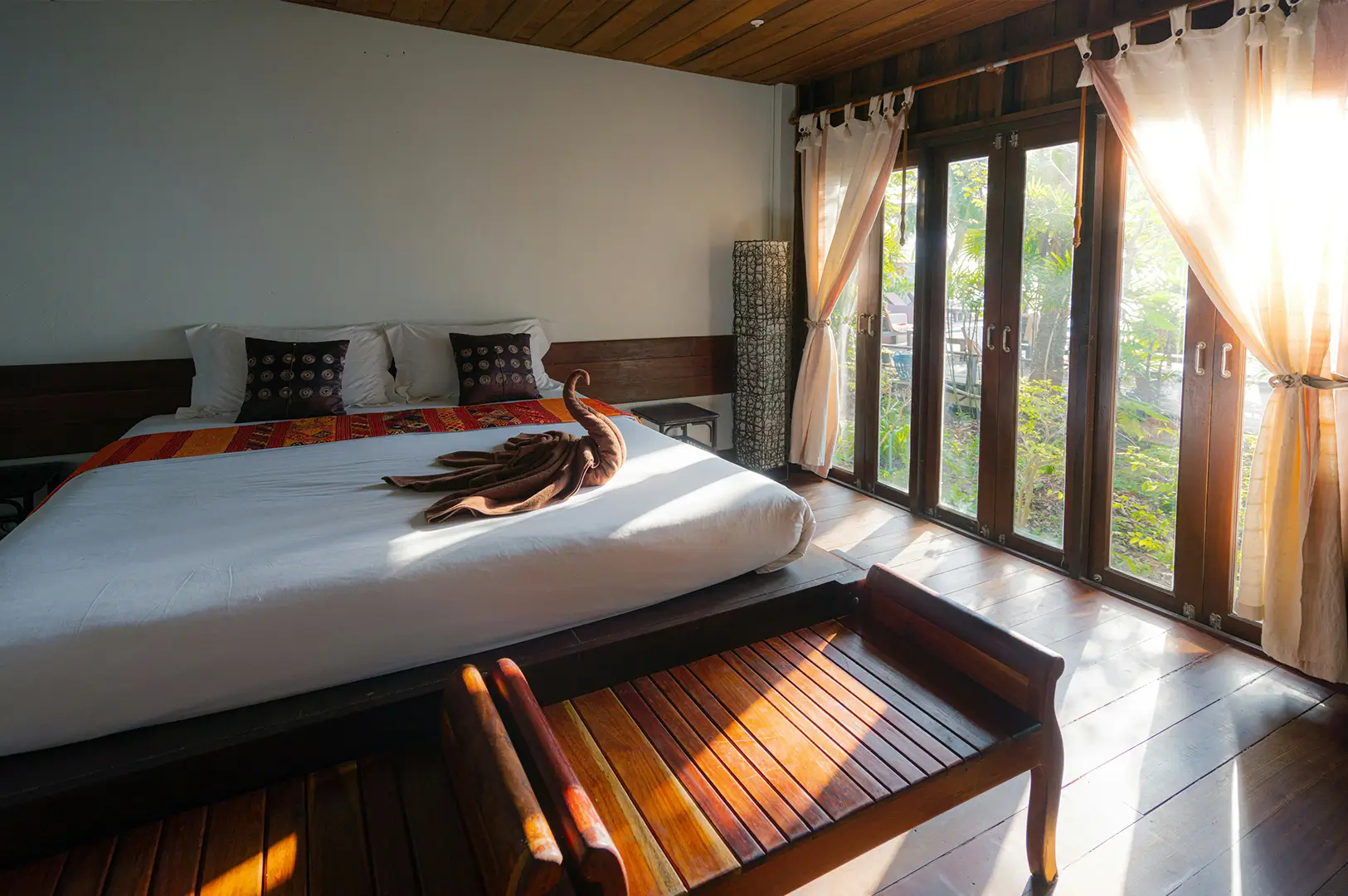
It was close to midnight, and I couldn’t turn off the lights.
The room was lovely—terrazzo floor, rattan headboard, a pendant lamp shaped like a paper lantern. I’d booked it almost entirely based on one photograph. Now I was standing beside the bed, pressing switches one by one, suitcase open on the floor because there was nowhere else to put it.
That night taught me something I carry into every hotel I write about. A room can photograph beautifully and still fail at the simple things.
Since then, I’ve paid closer attention to how a room actually works. In my experience, interior design in Singapore reveals its quality most clearly in boutique hotels. Space is tight, the weather is unforgiving, and many buildings are far older than the businesses inside them. This guide is what I wish someone had shared before that night—a look at the design ideas, trends, and decisions behind the spaces that stay with you.
What Makes Interior Design in Singapore Unique?
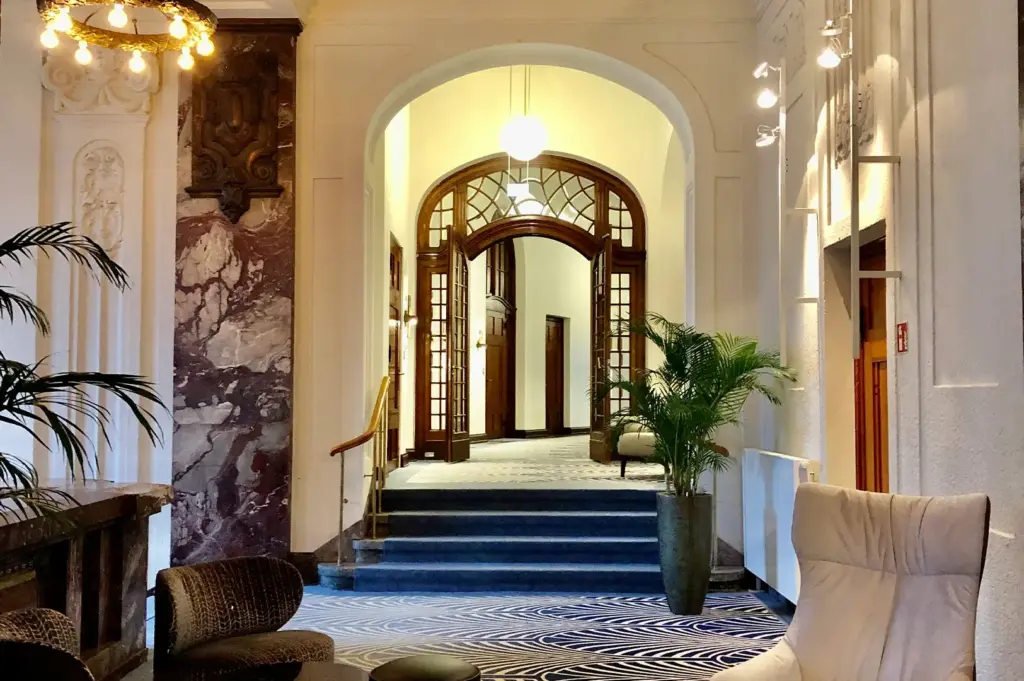
Interior design in Singapore works under a specific set of pressures. None is unique on its own. Together, they shape almost every decision a designer makes.
- Limited space. High land costs mean compact sites and smaller rooms. Every square meter has to justify itself.
- A tropical climate. Humidity, heavy rain, and constant air-conditioning affect how materials age.
- Architectural heritage. Conserved shophouses and old warehouses come with walls, beams, and rules that can’t simply be moved.
- Multicultural identity. There are many traditions to draw from, which brings real responsibility.
- International guests. Rooms need to make sense to someone arriving from anywhere, often tired and late at night.
I’ve found the most useful question isn’t “Is this beautiful?” A better one is: How does this design respond to the building, the city, and the people using it? That question changes what you notice.
Boutique Hotels vs. Home Renovation: Why Dream Home Rules Don’t Translate
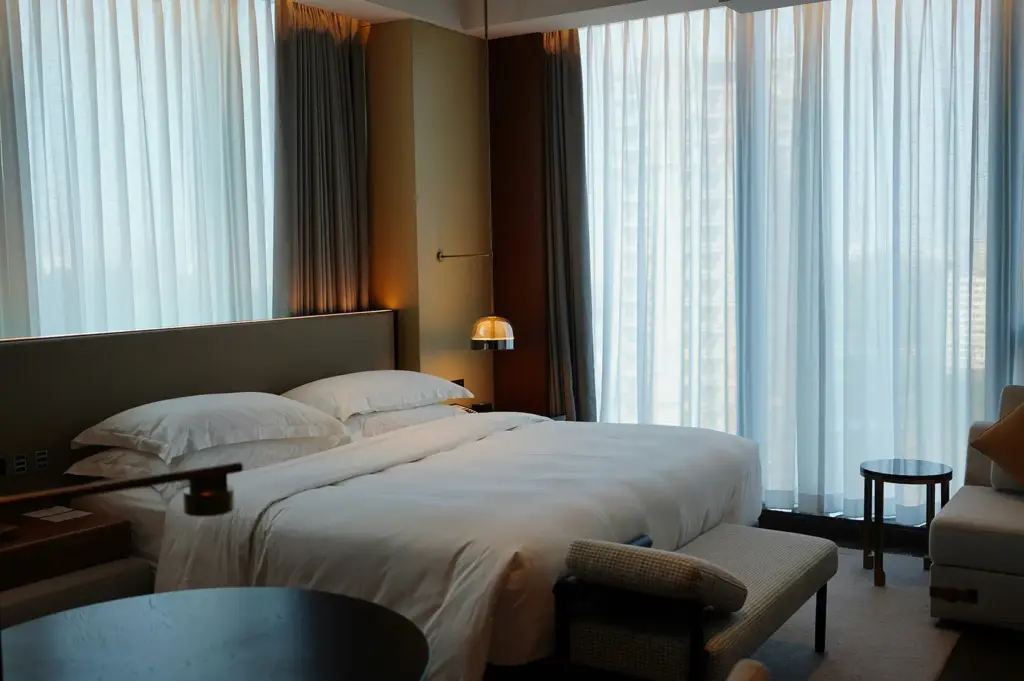
Search for “interior design Singapore” and most results are about home renovation—HDB flats, landed home projects, firms ready to build your dream home. That makes sense, since residential work drives much of the industry.
But hotel interiors solve a different problem.
A home interior design project is tailor-made for one household. You might want deep wardrobes, a generous dining table, and living spaces arranged around your family’s routines. Even urban home design, at its most minimal, is shaped by a specific life.
A boutique hotel room has to work for a stranger staying two nights. It needs luggage space rather than long-term storage, lighting suited to sleeping, working, and getting dressed, and materials that hold up to daily housekeeping. Interior designers in Singapore who work in hospitality understand that these functional spaces serve clients they will never meet.
For a closer look at what defines this category of property, read our guide about what is a boutique hotel here.
Behind the Stay: Home renovation costs and HDB-registered contractor status relate to residential work. They aren’t a benchmark for hotel renovation projects. Commercial projects carry different fire safety, accessibility, and durability requirements—so a home renovation quote tells you very little about what a hotel refit might cost.
Space Planning and Material Selection: The Foundation of Good Design in Singapore
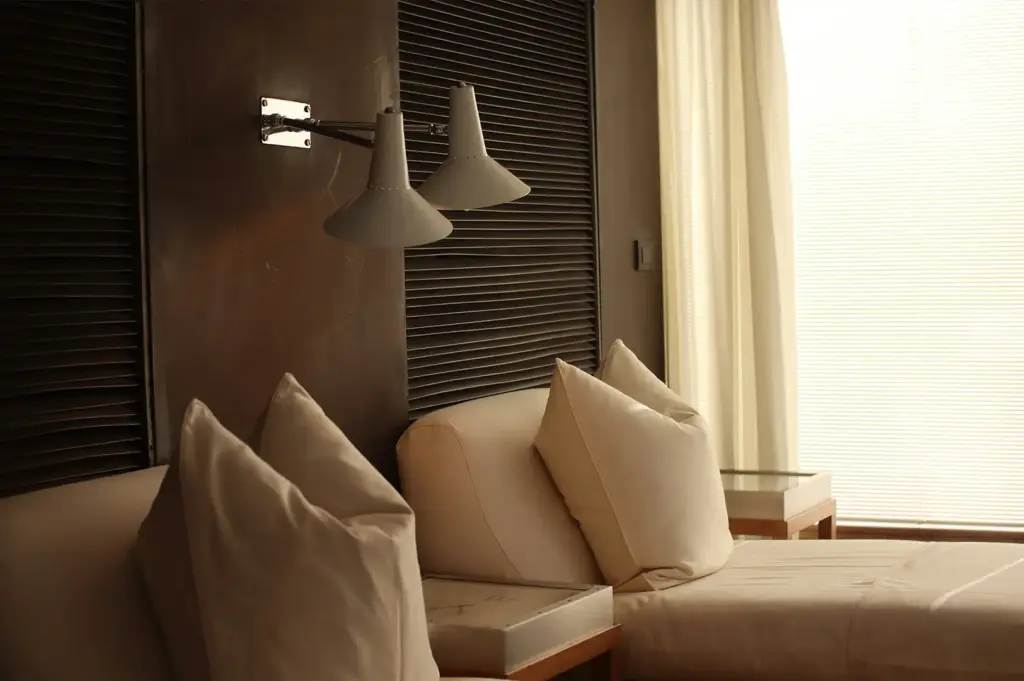
Small rooms, careful decisions
Space planning determines how you move through a room. In compact hotel interior spaces, small choices carry real weight. A bathroom door that swings the wrong way or a desk blocking your path can wear you down over a few days.
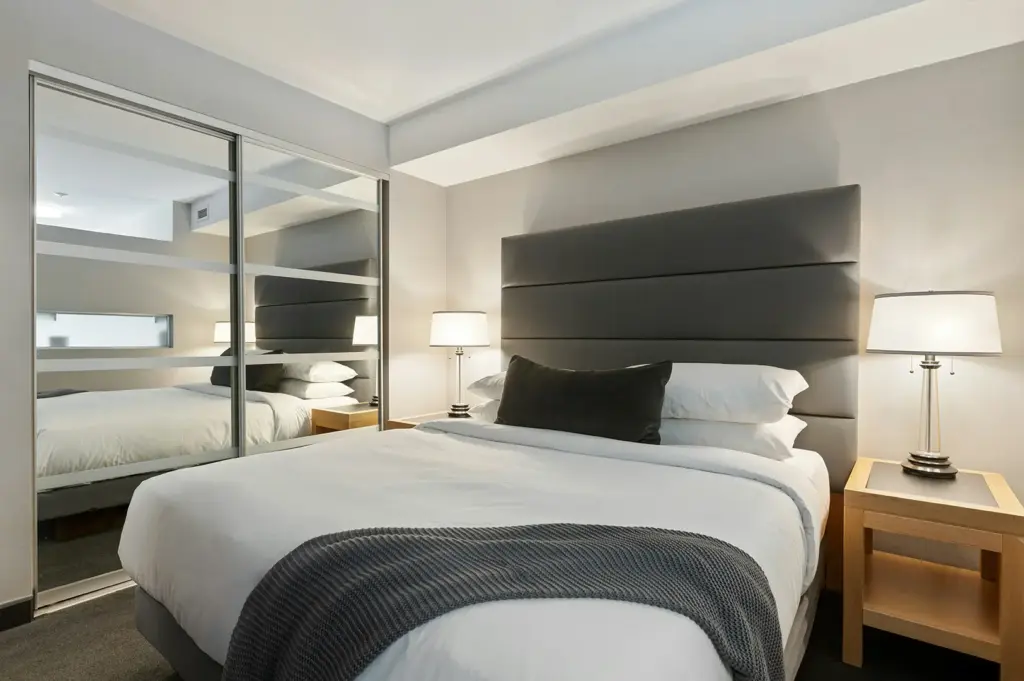
Picture an 18-square-meter room. A thoughtful interior design firm might use a wall-mounted bedside shelf instead of a bulky cabinet, a built-in luggage bench, mirrors placed to stretch the sightlines, a narrow writing surface, and layered lighting on separate controls. Creating spaces that feel generous without adding square meters is one of the harder design skills to develop and it rarely shows up in a photograph.
Before You Book: Before booking, look for a photo taken from the bed toward the door. It’s the least flattering angle and the most honest one. You’ll see where your suitcase will actually go.
Materials that survive the tropics
Material selection in Singapore is partly about appearance and mostly about endurance. Timber moves with moisture. Natural stone can stain and become slippery. Metal can corrode in humid air. Wallpaper may lift in a bathroom that never fully dries.
The best material is rarely the most expensive one. It’s the one that balances aesthetics, maintenance, and the design concept. A modern luxury finish that photographs well but chips after six months of daily housekeeping is a poor investment. Vintage furniture can add real character, but it needs careful assessment before it can stand up to commercial use.
Heritage and Contemporary Design in Singapore
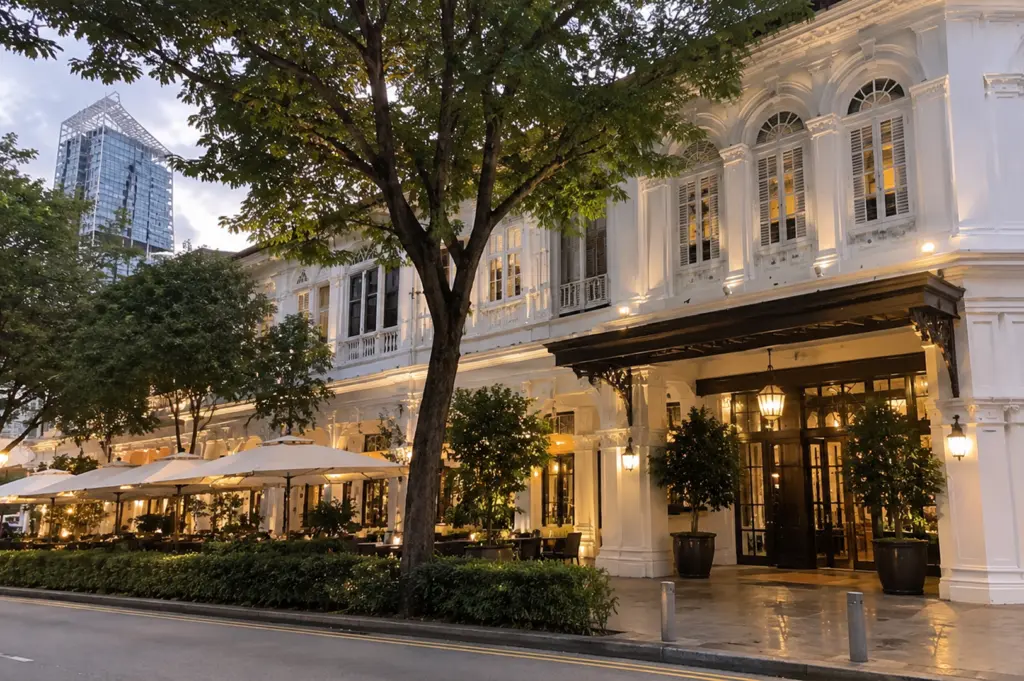
Much of the most interesting design in Singapore happens inside old buildings.
Conserved shophouses come with rules. Singapore’s Urban Redevelopment Authority emphasizes keeping as much of the original structure as possible, restoring and repairing it carefully. Interior designers in Singapore working on heritage properties may need to plan bathrooms, air-conditioning, and lighting around beams and walls that have stood for nearly a century. Not every shophouse can become a hotel, either new hotels face restrictions in the Little India Conservation Area and parts of Chinatown.
I’ve come to see these limits as a source of character. When a room has an odd angle because of an old party wall, that irregularity tells you something true about the building. You’re sleeping inside its history.
Real Examples of Boutique Hotel Interior Design in Singapore
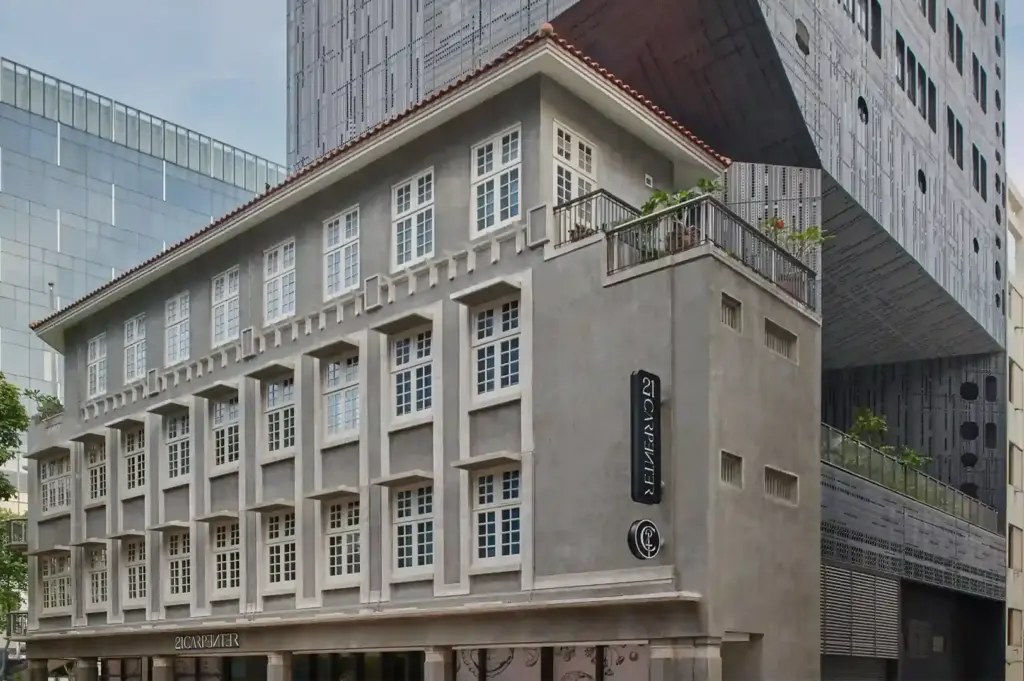
21 Carpenter
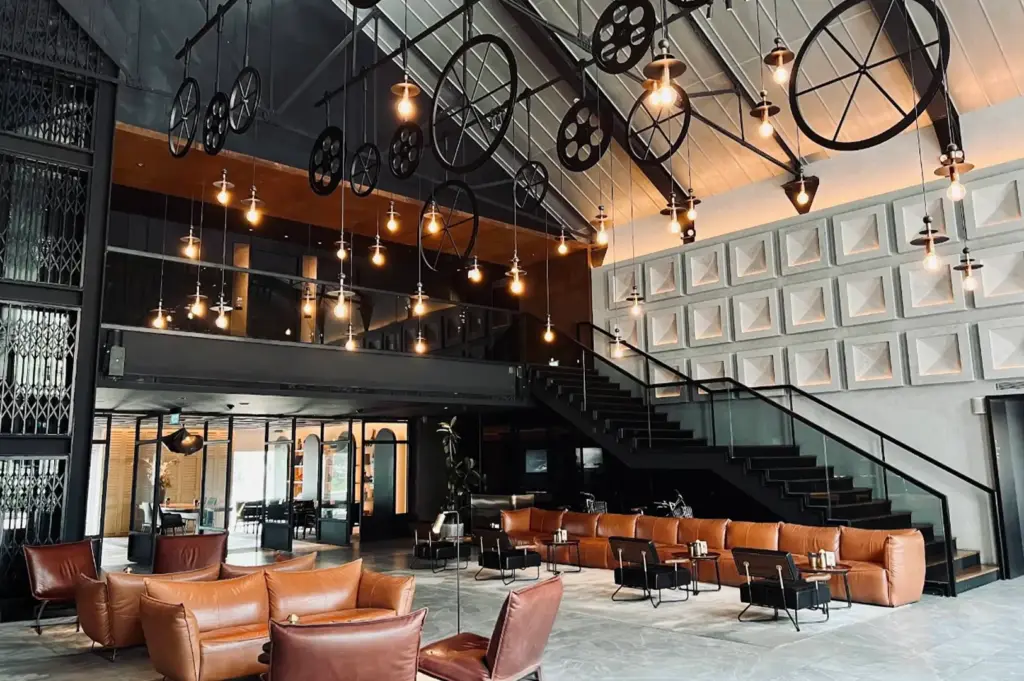
On Carpenter Street, WOHA restored a group of conserved 1936 shophouses—once a remittance house—and added a contemporary extension. Verses from historical remittance letters appear in the perforated aluminum facade, which also shades the building from the sun. What stays with me is that the history does real work here. It isn’t framed behind glass. The conserved interior spaces vary in size, outlook, and detail—a direct result of designing around an existing structure rather than despite it.
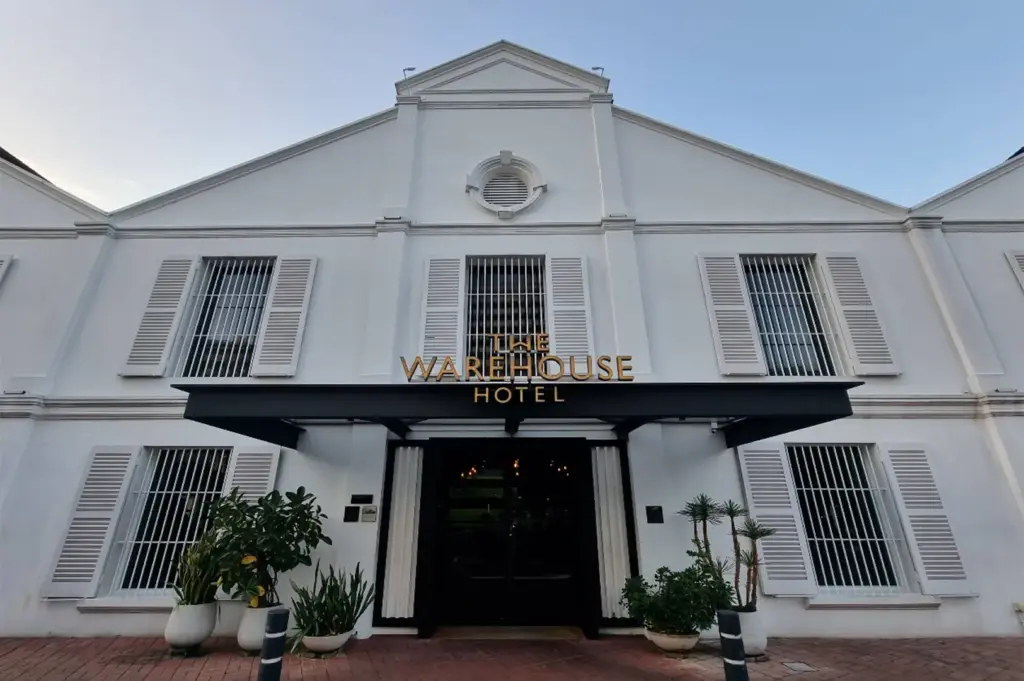
The Warehouse Hotel
At Robertson Quay, Singapore studio Asylum shaped the interiors and branding of this 37-room hotel. Original brick walls and a double-volume lobby remain. Pitched roofs and exposed trusses give guestrooms their varied layouts. Collaborations with local designers, artists, and craftspeople add a sense of place no catalog can supply. It’s highly recommended by those who value design over convenience.
Naumi Hotel Singapore
On Seah Street, Naumi takes a different path. Its 73 rooms rely on contemporary design and art rather than heritage—an exterior mural by street artist Tr853-1, a video installation in the lobby, lenticular works in selected areas. Design ideas rooted in creativity and artistic expression can carry a building just as effectively as an old beam.
The Design Process: From First Consultation to Final Outcome
Here’s how a hotel interior actually comes together, the entire renovation process in plain terms:
- First consultation. The owner and interior design company define target guests, room count, budget, and atmosphere. This is where design style and property type shape the project’s direction.
- Site assessment. The team surveys the building, checks structure and services, and identifies any conservation limits.
- Design concept. Mood boards, early layouts, and material references set the direction. Good designers bring fresh design ideas while keeping the building’s character in view.
- Space planning. Room layouts, guest circulation, and housekeeping routes are planned together.
- Design development. The concept becomes detailed specifications for furniture, joinery, lighting, and bathrooms.
- Selecting materials. Each finish is tested against durability, cleaning needs, and fire performance.
- Approvals. Qualified professionals handle regulated submissions.
- Renovation. Contractors build, and project management keeps everything coordinated through the renovation process.
- Handover. Defects are found and corrected before guests arrive.
- Operational review. Real guests reveal what the design got right and what it didn’t.
Every renovation journey has its own pace. A guestroom refresh can take several months. A major heritage conversion may take 12 to 24 months, depending on approvals and what turns up behind old walls. Costs vary just as much. A 30-room renovation project at a hypothetical S$35,000 per room reaches S$1,050,000 for guestrooms alone—before lobbies, professional fees, contingency, or lost operating revenue.
How Hotels Choose an Interior Design Firm and the Best Interior Design Companies
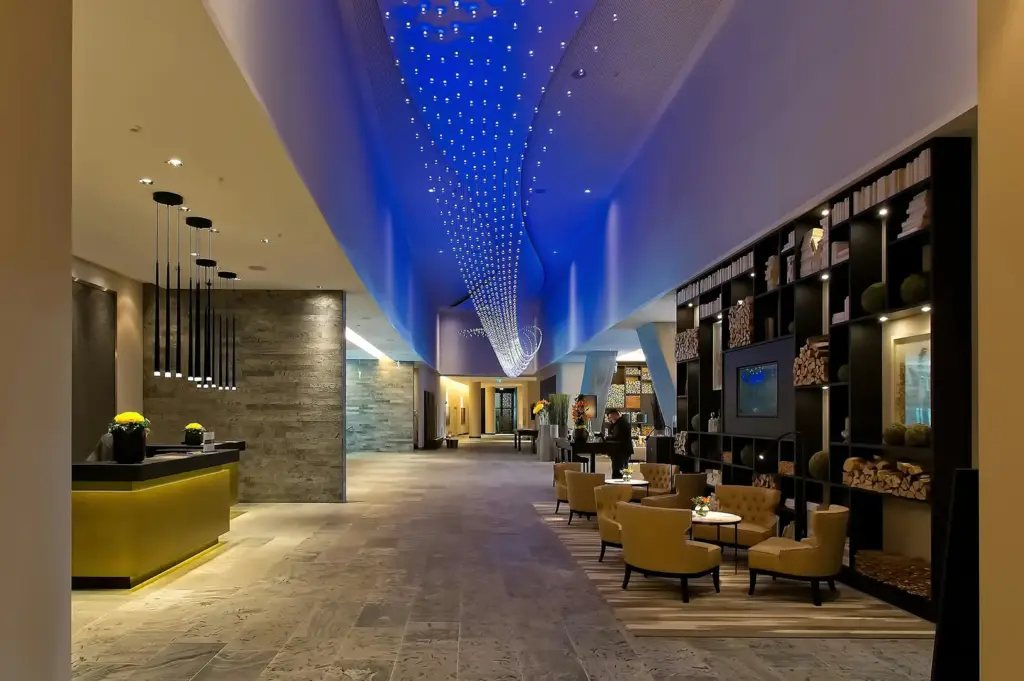
For hotel owners, choosing an interior design firm takes more than browsing attractive portfolios. Residential designers may have strong design skills—some, like Interior Lab, are well known for home projects—but hospitality work calls for specific expertise. The best interior design companies for boutique hotel renovation services are those whose team guides clients through both creative and operational demands, from initial consultation through to the final outcome.
Here’s what I’d look for:
- Completed projects in hotels, restaurants, or comparable commercial spaces
- Clear communication on decisions, changes, and costs
- A detailed quotation that shows what’s included and what isn’t
- Transparent pricing — not the cheapest bid, but one you can actually understand
- A defined project scope with clear lines of responsibility
What the Top Interior Designers Have in Common
Top interior designers ask about housekeeping early. They want to know how linen gets changed, where trolleys park, and how a guest finds the light switch in the dark. They treat function as part of the design, not something that gets in the way of it. They know how to build spaces that work just as well on the hundredth night as on the first.
Before You Book: During a design consultation, ask, “How will this room look after a year of daily cleaning?” The answer tells you a great deal about a firm’s priorities.
Design You Can Feel
I still think about that lantern-shaped lamp, and the switch I never found.
Good design rarely announces itself. It’s the shelf right where your hand reaches. It’s the window that catches the morning light without the afternoon heat. It’s an old timber beam left in place because someone decided it mattered.
The next time you stay somewhere in Singapore, slow down for a moment. Notice where the light falls. Ask yourself why the room is shaped the way it is. You’ll start to see the decisions behind the space and the people who made them.
What To Know Before You Stay
What makes interior design in Singapore unique?
The combination of dense urban sites, tropical weather, multicultural influences, and conserved architecture.
How is hotel design different from home interior design?
Hotel rooms must handle repeated short stays, daily cleaning, and commercial safety requirements. Home design follows one household’s routines.
Who are the best interior design companies for boutique hotels?
There’s no single answer. Look for firms with verifiable hospitality work and strong coordination with architects and engineers.
Are boutique hotel rooms always small?
No. Room sizes depend on the building and property type.
Can a heritage hotel feel modern?
Yes. Adaptive reuse often pairs conserved structures with contemporary comforts, 21 Carpenter is a good example.
How long does a hotel renovation take?
Anywhere from several weeks for a light refresh to two years or more for a full heritage conversion.
Can a heritage hotel feel modern?
Yes. Adaptive reuse often pairs conserved structures with contemporary comforts, as 21 Carpenter shows.
How long does a hotel renovation take?
It ranges from several weeks for a light refresh to two years or more for a full heritage conversion.